Fabric Africa: Stories told through textiles (30 June 2018–19 May 2019)
Dr Sarah Worden (Curator of African Collections, National Museums Scotland), 16th March 2019.
Bristol Museum and Art Gallery’s Fabric Africa special exhibition is a celebration of fashion and style, ‘a snapshot of the amazing world of African textiles’. The exhibition includes for the first time together highlights of textiles and clothing from the Museum’s World Cultures and British and Empire and Commonwealth collections which date from the late 1800’s to the present day and come from countries including Nigeria, Ghana, Kenya, South Africa, Sudan, Mali and Swaziland.
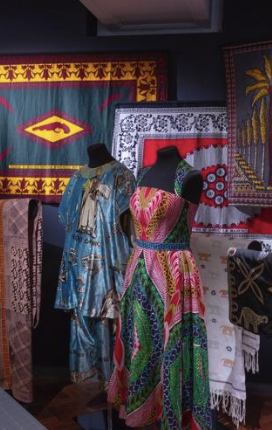
Fundamentally clothing is all about the people who make and wear them. It is always a challenge in static museum displays to recreate the dynamic contexts in which textiles function. Here the multi-layered and vibrant pattern and texture of just under sixty objects make a powerful, visually exciting statement and one which demands and holds the visitor’s attention. The range of materials and construction techniques found in African textiles is extensive and many feature in the outfits on display, including robes and wrappers of indigo-dyed cotton cloth from the Hausa in northern Nigeria, a heavily embroidered tunic from Cameroon, and a hand-woven silk kente cloth from Ghana, which will be of interest to textile students and practitioners.

Interpretation of the displays is organised into four interconnected themes covering Fashion; Exchange; Communication and Status which introduces historic and contemporary connections between individuals, communities and countries. Information about the objects is presented through a series of thought provoking questions. Do your clothes tell people where you are from? What makes African fabric African? Information includes an introduction to the commercial connections between Africa and Britain through which the huge variety of factory cotton printed cloths circulated between Britain and Africa, and within a number of African countries for local markets. The displays include Malawian chitenje printed with logos and portraits which show political party affiliation and Kenyan kanga cloths printed with proverbs and symbols representing shared traditions which exemplify the communicative potential of clothing. Other collections highlights include the huge tailored and embroidered robes from northern and southern Nigeria which represent centuries old traditions of high status dress influenced by Islam.
The item of clothing which to my mind sums up the exhibition is the distinctive wedding dress created by Audrey Migot with Bristolian designer Karen Reilly, for her wedding in Bristol in 2016 (pictured, right). A Kenyan woman, living in Bristol, she wore a tailored dress of West African prints originally produced in Europe. Audrey is one of four African individuals living in Bristol whose personal stories relating to the role of textiles in their cultural heritage have been recorded for the visitor to engage with contemporary perspectives from the African diaspora.
The subject of African textiles and dress is rich and multi-layered, expressing similarities and differences between cultures. This exhibition also introduces the Bristol Museum’s World Cultures African textile collections to researchers of African textiles, which is a very positive outcome, and contributes to the new research on the collections of the former British Empire and Commonwealth Museum (BECM) which in 2012 were transferred to the care of Bristol Museums, Galleries and Archives. This is a major collection which covers a wide range of material relating to the countries of the British Empire and the Commonwealth and one with huge research potential.
This exhibition is a lively introduction of African textiles for visitors, not only to the eclectic and the unfamiliar, but also a means to compare connections between cultures, both old and new. To supplement their gallery visit, schools can borrow one of the special African textiles handling boxes to feel different African textiles, try on garments, discover who made them and how they were created, which makes a great additional resource. African textiles are a subject of particular interest to me, and I was delighted to visit Bristol, talk to curator Lisa Graves about the development of the exhibition and share her enthusiasm for the fascinating textiles in the World Cultures collection held in Bristol.
Interested in finding out more about the Fabric Africa exhibition? Last year curator Lisa Graves wrote about the thinking behind the exhibition for the MEG blog.