Returned treasures to the Larrakia Country in a repatriation ceremony at the Bristol Museum
Renee Keeffe | Art Facilitator and Co-Curator at the UCL Cultural Lab | 18th November 2025.
In September 2025, over 30 cultural objects were repatriated from Bristol Museum & Art Gallery to the Larrakia people of Darwin, Northern Territory, Australia, in a ceremony that celebrated cultural exchange and understanding.
The Larrakia people are the traditional owners of the land and sea around Darwin in the Northern Territory of Australia. They are known as the ‘saltwater people’. The treasures of the Larrakia people were gathered into Bristol’s museum collections more than a hundred years ago. Clubs and spear throwers are the last batch of objects to be repatriated from Bristol City Council’s museum as part of the Return of Cultural Heritage (ROCH) programme. The process, led by Aboriginal and Torres Strait Islander Studies (AIATSIS), in partnership with Larrakia Development Corporation, has seen many ceremonial objects from across Bristol Museum & Art Gallery’s collections returned.
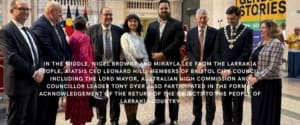
Voices from the Larrakia Community
Community members from the Larrakia representatives spoke at the event about the occasion’s significance:
Nigel Browne, CEO of Aboriginal Investment NT said:
“It has been a long journey getting to this point but one that is rewarding. Having worked with the team at AIATSIS for over three years, I am proud and honoured to be involved in this process for my people. It is great to see these artefacts back and I am really looking forward to them being on display at the Larrakia Cultural Centre, along with many other important items that will come home.” (AIASTIS)
Mikayla Lee, member of the Larrakia Cultural Centre Advisory Group, said:
“We can’t wait to bring our Ancestors’ spears home to Larrakia Country. It is an exciting time to share in this cultural revitalisation and to open the door for truth-telling, healing and reconciliation with our community. We hope their return will also foster deeper and respectful relationships between our community and the institutions who have cared for them over the years. These spears belong on Country, where the spirit of our Ancestors still lives.” (AIASTIS)
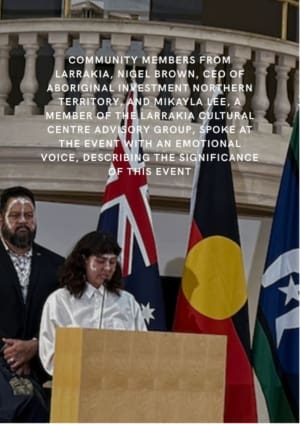
Repatriation Ceremony
Representatives from the Larrakia people and Bristol City Council sign a historic agreement at a formal ceremony at the front of the Ceremony.
This repatriation process involves collaboration between indigenous communities, museums, and other institutions to ensure safekeeping and to follow the correct protocols and policies when returning objects (treasures) to their traditional owners’ Country.
At the ceremony, friends, family, community members, curators and international guests gathered at Bristol Museum & Art Gallery to witness and celebrate this momentous occasion. Speakers included Nigel Browne and Mikayla Lee speaking on behalf of the Larrakia people, Leonard Hill, Chief Executive Officer, AIATSIS, speaking on behalf of the ROCH programme, plus representatives from Bristol City Council, and the Lord Mayor of Bristol. Lisa Graves, Lead curator (World Art), Bristol Museum & Art Gallery, and Councillor leader Tony Dyer of the Bristol Council were also in attendance to jointly acknowledge that the objects are returning to the people of Larrakia Country.
Tony Dyer said:
“We are proud to support the respectful return of these items of cultural heritage to the Larrakia People. We are grateful to have worked so closely with everyone involved in this formal repatriation. This international collaboration is a powerful and significant step towards shared understanding and partnership.” (Bristol City Council, press release 2025).
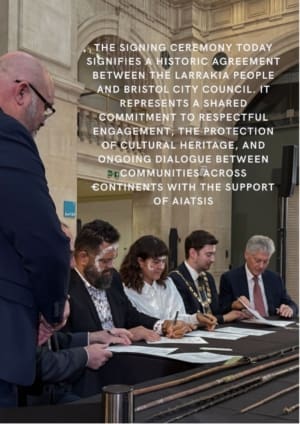
Truth-Telling and Recognition
The return of these items, with support from the Australian Institute of Aboriginal and Torres Strait Islander Studies (AIATSIS), is a significant step on the path to ‘Country.’.
AIATSIS Chief Executive Officer Leonard Hill said:
“The return of these items to the Larrakia people is a profound act of recognition and respect. It is an example of shared commitment to truth-telling and to restoring cultural authority to First Nations communities. The objects that were taken belong with their people, in their Country, where they can once again contribute to cultural life and intergenerational knowledge.” (AIASTIS)
A Journey Home
The return of these objects to the Northern Territory from Bristol is a journey that is physical, spiritual, and cultural. They contain memories, and they hold knowledge and the spirits of their ancestors. In their return, they reconnect people to the Country and show that culture has not been lost but is still alive. Leaving Bristol behind and returning home to Larrakia Country closes one chapter of history and opens a new one. Their homecoming marks a new beginning for relationships between nations, between communities and the living cultural landscapes of the Northern Territory.
Upon arrival in Darwin, the objects will be cared for at the Museum and Art Gallery of the Northern Territory, then moved to a new cultural centre in 2026, where the objects will be looked after by the Larrakia people for their future generations. This centre will be situated at the heart of the Larrakia Cultural Centre. These objects will continue to play a vital role in supporting and strengthening the revitalisation of culture, language, and identity for both current and future generations as part of the initiative developed by the Larrakia Development Corporation.
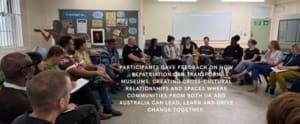
Keep Connected Workshop
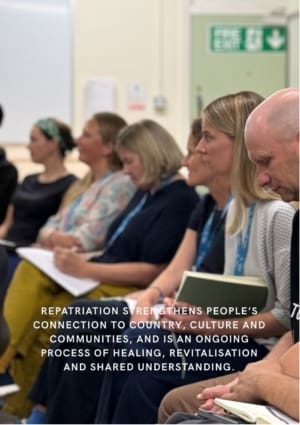
The following day, with the assistance of the head curator, Lisa Graves from the Bristol Museum and Art Gallery and MEG hosted a small event with a Keep Connected repatriation workshop, bringing together representatives from the Larrakia community, museums, researchers, and cultural heritage practitioners. The workshop theme involved maintaining connections while revealing the truth and exploring future models of reciprocal, community-led, and institutional collaborations: museums, other institutions, and First Nations peoples. Led and facilitated by AIASTIS colleagues, the workshop provided a safe environment to discuss several issues, including the return process.
Considering how this can be conducted respectfully and safely, how to care for material once it has been returned and the continuing role of museums as genuine partners in renewal. Delegates shared their thinking and experience of how repatriation offered the potential for radically transforming museums, creating cross-cultural relationships and enabling all communities to lead and learn in both the UK and Australia. The day concluded with a commitment to continue to forge the pathways for learning and exchange, understanding the return of cultural heritage as an active and living process, underpinned by respect, mutual trust and reciprocity.
Note: Most information and quotes are sourced from the following sources: