Does a museum need a permanent object collection to be a permanent museum?
Mona Jamil, Head of Civic Engagement and Lucy May Maxwell, Collections Researcher| Migration Museum | 12th August 2026.
The Migration Museum is a young, emerging museum, founded around a kitchen table by people with a belief that the Migration Museum was the UK’s missing museum. Migration is the thread that connects us all – the movement of people to and from these shores across the centuries has shaped who we are and where we’re going. And how else to explain our culture – from food, to music, to architecture – without understanding the cross-currents of people moving in and out of the country?
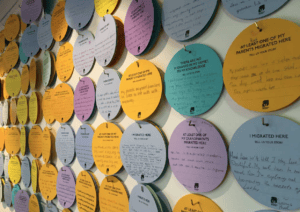
The ‘kitchen table’ museum began in 2013. The small, committed team that became the museum’s first employees has been prodigious in their outputs ever since. There’s been a high rate of successful thematic story-led temporary exhibitions, the award-winning learning programme, and the development of a national Migration Network, which brings together people working on migration themes across the museums, heritage and academic sectors. The team has connected with people through a genuine, deeply embedded process, including the development of our community engagement toolkit. Along the way, we’ve collected over 10,000 personal migration stories shared with us by visitors to our museum. And in 2025, we built a digital dispersed Migration Collection prototype that pulls together migration-related objects from established museums and archives. All of which has been achieved without the museum establishing a permanent collection.
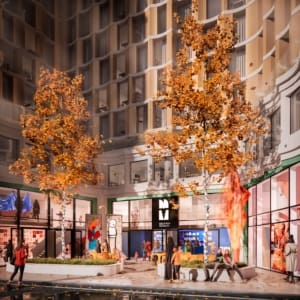
Now, we are developing the museum’s first set of core exhibitions for our permanent home – opening in the City of London in 2028. As a new museum project that has migrated from site to site over several years, the phrase ‘permanent galleries’ seems too static when describing our exhibition content. How do we bring the magic of the temporary, the responsive, the participative into displays that need to withstand the high visitor traffic we’re hoping for over five, seven, ten years?
In November 2025, we ran a survey, asking the museum sector and our Migration Network for advice on how the Migration Museum could responsibly become a collecting organisation. The survey allowed us to identify gaps in migration-related collections in the UK, whilst also identifying institutions we could potentially borrow objects from in the future.
Staff responded from different types of institutions including national, civic, and independent museums. The responses conveyed a mix of caution as well as excitement for our collecting plans. While museums are proud of the way they’ve told migration stories in temporary exhibitions, they advised us against collecting too rapidly. Over time, contextual information of objects can be lost, and managing collections can become the overwhelming responsibility of a small team, rather than researching and using those collections.
Here’s just a few of the valuable pieces of advice we received:
“Be cautious in how you acquire but bold in how you use your acquisitions. Consider ownership carefully, and the link between ownership and power. I don’t think a museum HAS to have a permanent collection.”
“Think about the idea of a dispersed national collection of migration. We should absolutely have a dedicated collection but it shouldn’t replicate what might exist. Think about how loans and transfers from other collections might create a richer and more dynamic whole.”
“Consider how you will use the items you collect and their stories. Imagine someone managing the collection in 100 years, will they have what they need to tell a variety of stories? Be prepared to dispose of things if you realise later on that collecting them wasn’t the best choice.”
The message was clear: collect a small number of key objects that reflect and enhance the mission and vision of the museum. Become the kind of museum that thrives on object loans from other organisations. Continue to show the museum sector the playful, informal, interactive, thoughtful displays that can be created with or without objects.
From our non-museums-based network members, we were offered a kaleidoscope of ways of engaging visitors such as campaigning, podcasting, leading walking tours, appearing at music festivals, and developing performance pieces.
Can we both become a collecting organisation and remain playful?
What does it mean for an organisation to grow up?
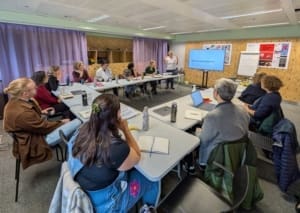
To help us resolve these big questions, the Migration Museum team hosted a workshop with consultants Claire Fry and Emma Chaplin in February 2026. We spent the day discussing the pros and cons of establishing a collection, what the Museum Accreditation process involved, and how it would support our work in the long term.
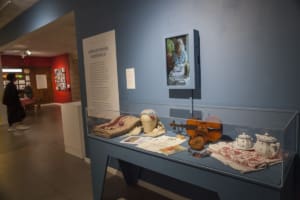
Some staff expressed their concerns that an object collection would mean traditional object displays – and there would be a deadening of the stories that we sought to convey. In Keepsakes, a past exhibition that displayed a group of objects together in a case, we included video testimonials from contributors alongside the objects. The contributors’ voices served as the primary lens for interpreting the objects. Similar approaches might not be possible when displaying more historical artefacts. We also don’t want to have an extractive collecting policy that decontextualises objects and takes them out of the homes where they have the most value.
We left the workshop with two key messages:
1) A collection needs to work for the museum’s mission and values
2) Accreditation is a scalable process – we can join it with a small collection
To date, the museum has documented and preserved over 10,000 migration stories through its story discs. As a participatory museum shaped by lived experience, we work with groups to grow our living collection of migration stories. We have convened a People’s Panel of over 50 community members to act as collaborators and critical friends, helping gather stories and shape the museum’s future direction.
People’s Panel members are currently recording the lived experiences of migration with people within their networks – friends, family members, neighbours, colleagues, and comrades. Through oral history interviews, they are capturing narratives that the museum will preserve for future generations. We’re looking forward to seeing which objects may appear along the way – some of which may become part of our exhibition content in the future.
We have been working with Emma Chaplin to draft the museum’s first Collections Development Policy. This document is giving us the chance to define our priorities for the permanent collection. We will continue to be story-led, we will focus as much on the present as on the past, and we will only collect where we have the capacity to care for objects in the long term.
Furthermore, our exhibitions will showcase objects held by other museums, community heritage organisations and individuals, and we will look to grow our digital dispersed Migration Collection. In this way, we can continue what the museum does best: welcoming people in and asking them to join us in our work, through their feedback, their engagement, their volunteering and advice. And we can also begin to do what only a museum can do – preserve objects that hold and reflect all of our stories of migration to and from the UK.
This collections research work was made possible thanks to funding from the National Lottery Heritage Fund.